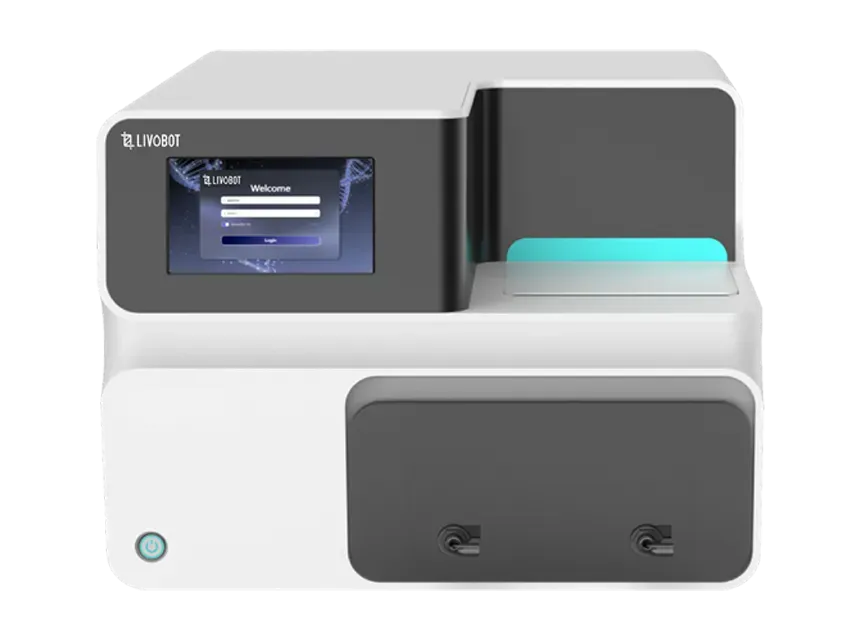
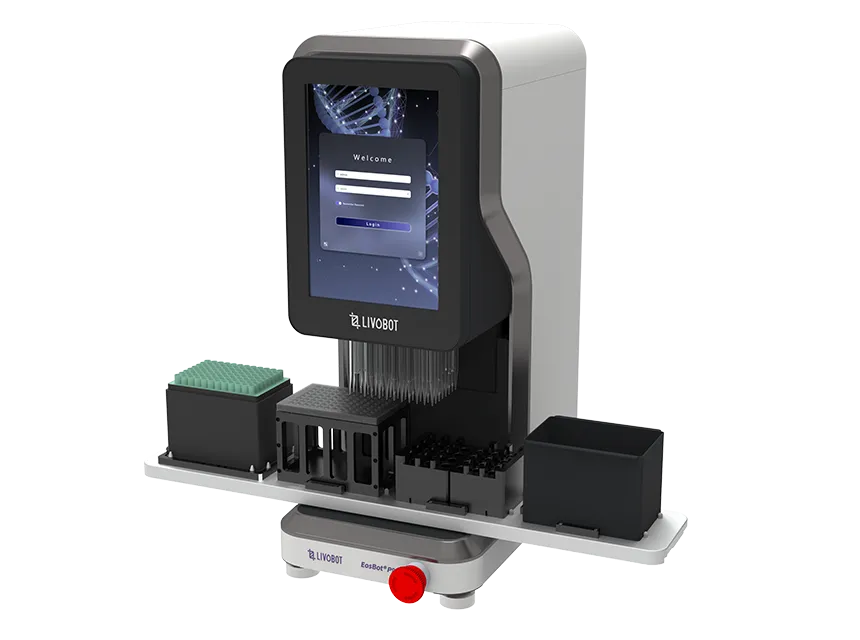
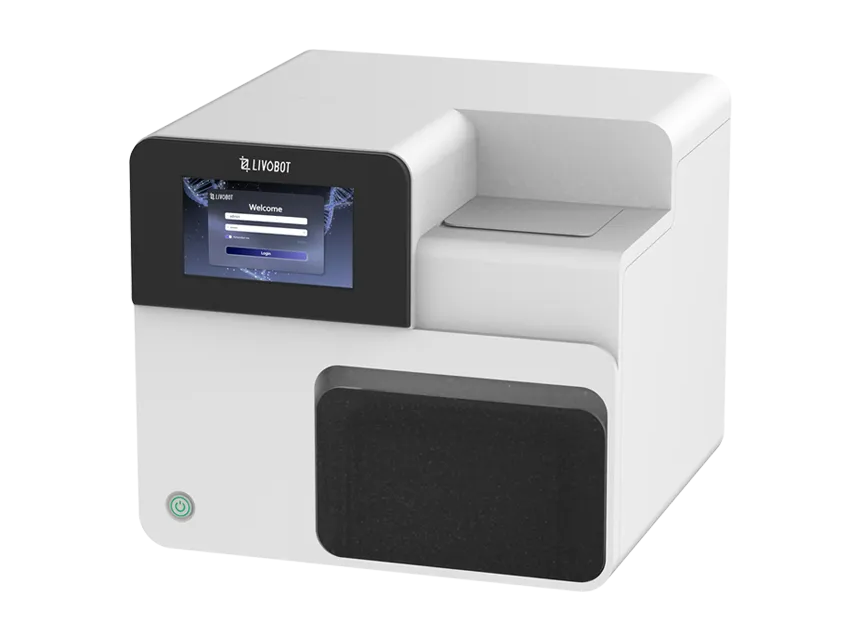
In the era of precision medicine, genomics, and life science innovation, next-generation sequencing has moved rapidly from advanced research laboratories into broader clinical research and industrial applications. As sequencing throughput continues to increase, sample preparation has become one of the most important factors affecting overall workflow efficiency and data quality.
Within the NGS workflow, nucleic acid fragmentation is a critical step. The stability, reproducibility, throughput, and cost-efficiency of fragmentation directly influence downstream library preparation, sequencing uniformity, and data reliability. To address these challenges, LivoBot has developed its EoSonics® FRAG series focused ultrasonication systems, powered by self-developed ACU™ technology. By combining precise ultrasonic control with an open consumables strategy, LivoBot provides laboratories with a flexible, scalable, and cost-effective solution for modern NGS sample preparation.
Industry Challenges: When Precision Meets Workflow Bottlenecks
In current NGS sample preparation workflows, laboratories commonly face three major challenges.
The first challenge is throughput. As sequencing projects scale from small sample batches to hundreds or thousands of samples, manual and semi-automated operations can no longer meet the growing demand for efficiency and consistency.
The second challenge is cost. Many high-performance fragmentation systems rely on dedicated proprietary consumables. While these systems may deliver strong performance, the long-term consumable cost can become a significant burden, especially for high-throughput laboratories.
The third challenge is workflow integration. Fragmentation and library preparation are often performed on different instruments using different consumable formats. This may require sample transfer between tubes, plates, or devices, increasing operational complexity and the risk of handling errors.LivoBot addresses these pain points with an open and automation-friendly approach.
Technical Breakthrough: ACU™ Technology for Precise Ultrasonic Fragmentation
LivoBot's core technology is ACU™, short for Adaptive Cylindrical Ultrasonic technology. This self-developed focused ultrasonication technology is designed to deliver controlled acoustic energy to the sample zone, enabling precise and reproducible physical shearing.Unlike enzymatic fragmentation methods, ultrasonic shearing is a physical process and helps reduce sequence bias. This makes it highly suitable for applications that require uniform coverage and reliable downstream sequencing data.
With optimized ultrasonic parameters, the EoSonics® FRAG series can support tunable fragment sizes from approximately 100 bp to 5 kb, meeting the needs of a wide range of NGS and epigenetics workflows. Key benefits of ACU™ technology include:
Non-contact physical shearing
Reduced sequence bias compared with enzymatic methods
Narrow and uniform fragment size distribution
Adjustable fragment length for different applications
Stable and reproducible processing performance
Compatibility with automated sample preparation workflows
By using focused ultrasonic energy, ACU™ technology helps laboratories achieve reliable fragmentation results while improving process consistency.
EoSonics® FRAG Series: Flexible Throughput from 1 to 96 Samples
Based on ACU™ technology, LivoBot has developed the EoSonics® FRAG series focused ultrasonication systems to meet different throughput requirements.
EoSonics® FRAG8
The EoSonics® FRAG8 is designed for medium-throughput workflows. It supports 1 to 8 samples per batch, making it suitable for research laboratories, method development, small sample batches, and routine NGS sample preparation.
EoSonics® FRAG96
The EoSonics® FRAG96 is designed for high-throughput sample processing. It supports 1 to 96 samples per batch and is suitable for sequencing laboratories, core facilities, and large-scale sample preparation workflows that require higher efficiency and consistency.Together, the FRAG8 and FRAG96 provide a scalable solution for laboratories with different sample volume requirements.
Open Consumables: Reducing Cost and Improving Workflow Flexibility
One of the major advantages of the EoSonics® FRAG series is its compatibility with commonly used laboratory consumables. Instead of limiting users to proprietary consumables, LivoBot supports standard consumable formats such as:
This open consumable strategy provides several benefits for laboratories:
Reduced long-term consumable costs
More flexible consumable sourcing
Easier procurement and inventory management
Better compatibility with standard automated workflows
Reduced dependence on closed consumable systems
For laboratories processing large numbers of samples, consumable flexibility can have a major impact on total operating cost. More importantly, standard-format consumables make it easier to connect fragmentation with upstream and downstream automation platforms.
Beyond Fragmentation: Building an Automation-Friendly Sample Preparation Ecosystem
LivoBot's innovation is not limited to ultrasonic fragmentation. The company is also developing an integrated sample preparation ecosystem that connects fragmentation with downstream NGS library preparation.
The EosBot® Seq series automated library preparation systems are designed to support automated NGS library construction workflows. When combined with the EoSonics® FRAG series, laboratories can build a more streamlined process from nucleic acid fragmentation to library preparation.
This ecosystem approach helps users improve:
In addition, LivoBot emphasizes openness in reagent compatibility. The EosBot® Seq series is designed to support mainstream NGS library preparation reagents and has been optimized for selected domestic reagent brands such as Vazyme, Yeasen, and TIANGEN where validated.
This open ecosystem gives laboratories greater flexibility in reagent selection and helps improve supply chain stability and cost control.
Local Innovation with Global Standards
LivoBot represents a new generation of life science technology companies focused on independent innovation, practical workflow design, and global usability. With its self-developed ACU™ technology, open consumables strategy, and automation-ready product ecosystem, LivoBot provides laboratories with an alternative approach to NGS sample preparation: one that combines precision, flexibility, and cost-efficiency.
The EoSonics® FRAG series has obtained relevant quality and compliance certifications, including NMPA Class I medical device filing and CB/CE certifications. These achievements support LivoBot's commitment to product quality, reliability, and international market expansion.
Conclusion
As NGS applications continue to expand, laboratories need sample preparation solutions that are accurate, reproducible, efficient, and cost-effective.With the EoSonics® FRAG series and ACU™ focused ultrasonication technology, LivoBot addresses key challenges in nucleic acid and chromatin fragmentation. Its compatibility with universal consumables helps laboratories reduce operating costs and simplify workflow integration, while its flexible throughput design supports both medium- and high-throughput sample preparation.
For laboratories seeking an open, scalable, and automation-ready solution for NGS sample preparation, LivoBot offers a strong and practical choice.
FAQs
Q1: What is ACU™ technology?
ACU™ stands for Adaptive Cylindrical Ultrasonic technology. It is LivoBot's self-developed focused ultrasonication technology designed to deliver controlled acoustic energy for precise, non-contact physical shearing of nucleic acids and chromatin.
Q2: How is LivoBot's ACU™ technology different from conventional closed ultrasonic fragmentation systems?
LivoBot's ACU™ technology combines precise focused ultrasonication with an open consumables strategy. The EoSonics® FRAG series supports commonly used laboratory consumables such as standard 96-well plates, 8-strip tubes, and single tubes, helping laboratories reduce operating costs and improve workflow flexibility.
Q3: How does the EoSonics® FRAG96 support high-throughput sample processing?
The EoSonics® FRAG96 supports flexible processing of 1 to 96 samples per batch. Its compatibility with standard plate formats makes it suitable for high-throughput NGS laboratories, sequencing core facilities, and automated sample preparation workflows.
Q4: Can LivoBot instruments help reduce consumable costs?
Yes. Because the EoSonics® FRAG series is compatible with universal laboratory consumables, users can reduce dependence on proprietary consumables. This can significantly lower long-term operating costs, especially in high-throughput workflows. Actual savings may vary depending on sample volume, consumable selection, and workflow design.
Q5: What applications are supported by the EoSonics® FRAG series?
The EoSonics® FRAG series is mainly used for DNA fragmentation in NGS library preparation and chromatin shearing for epigenetics applications such as ChIP-seq. It may also support other validated sample preparation applications depending on workflow requirements.
Q6: Is the EoSonics® FRAG series suitable for automated workflows?
Yes. Its compatibility with standard consumable formats makes it easier to integrate into automated sample preparation workflows. When used together with LivoBot's automated library preparation solutions, laboratories can build a more streamlined NGS sample preparation process.
Q7: Is LivoBot compatible with domestic NGS library preparation reagents?
LivoBot's EosBot® Seq series automated library preparation systems are designed with reagent compatibility in mind. They can support selected mainstream library preparation reagents, including validated domestic brands such as Vazyme, Yeasen, and TIANGEN, helping laboratories improve flexibility and supply chain control.
To better understand the broader principles of next-generation sequencing and the role of sample preparation in sequencing workflows, you may refer to the National Human Genome Research Institute's overview of DNA sequencing technologies:
https://www.genome.gov/about-genomics/fact-sheets/DNA-Sequencing-Fact-Sheet
 CN
CN